The King Who Came To Die | Sermon Notes

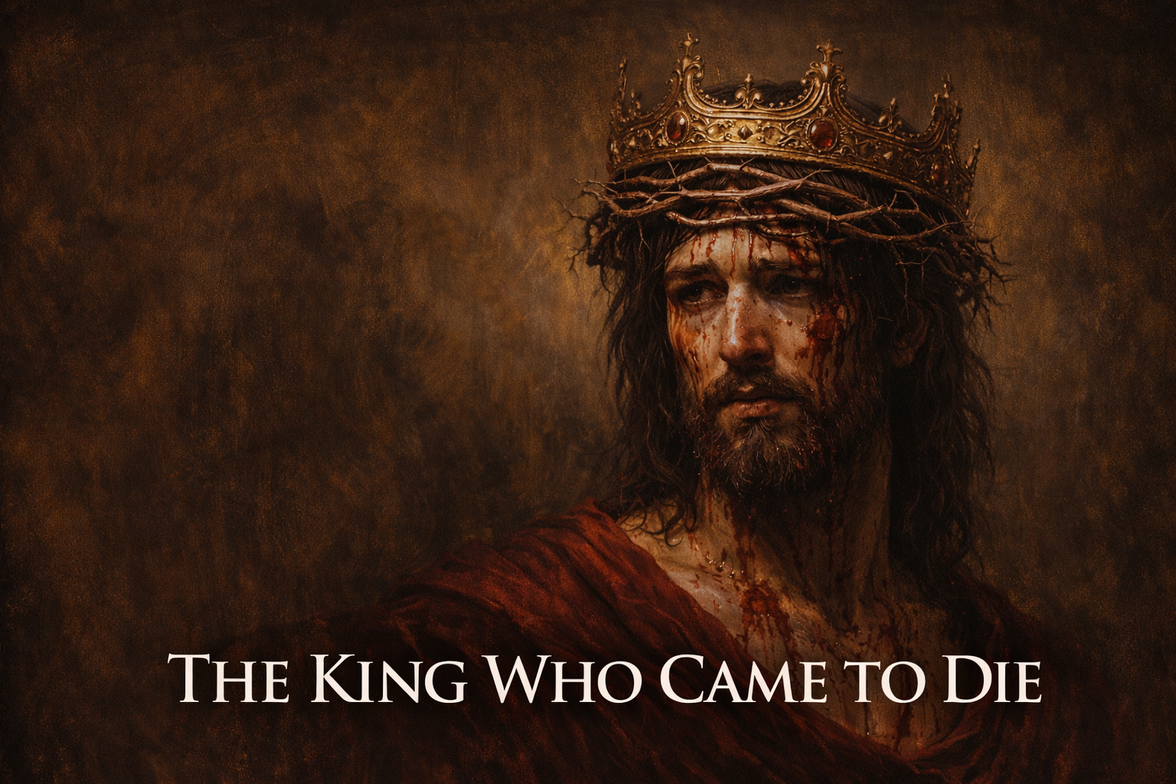
The King Who Came to Die
Sermon in a Sentence
Nothing will work, but the blood, no lamb, no bull, no offering, no work, no penance, nothing but the blood of Jesus will fix your heart, cause you to live again, or spare you from eternal judgement.
Key Texts
Hebrews 10:4 (KJV)
“For it is not possible that the blood of bulls and of goats should take away sins.”
Hebrews 10:19 (KJV)
“Having therefore, brethren, boldness to enter into the holiest by the blood of Jesus,”
Opening: The King Came on Schedule
Before we even get to the blood, we begin with the fact that Jesus did not arrive randomly. The King who came to die came on the very timetable of God.
1. Daniel 9 — The Countdown in Days
Daniel says there would be 69 weeks until Messiah the Prince. In the common evangelical reading, that means:
- 69 x 7 = 483 years
- 483 x 360 = 173,880 days
Using the commonly cited reconstruction tied to Artaxerxes’ decree, that count runs from March 5, 444 BC to March 30, AD 33, landing on the Triumphal Entry.
Main point: Daniel gave the number of days. Jesus came on schedule.
2. The Passover Calendar and the Sky
The Passover and lunar calendar data are often connected to Friday, April 3, AD 33 as a likely date for the crucifixion. A lunar eclipse on that date is part of why many connect it with the language of the moon turning to blood.
Main point: The Passover calendar lines up, and even the sky marks the date.
3. Darkness and Earthquake
The Gospels report darkness and an earthquake at the death of Jesus. Ancient tradition preserves the darkness theme, and geological work points to an earthquake in the right historical window.
Main point: The day the King died, the sky went dark and the earth shook.
The Name of the King
Yeshua HaMashiach Kaparatenu
Jesus the Messiah, our atonement.
Why Blood?
Leviticus 17:11 — “For the life of the flesh is in the blood…”
Romans 6:23 — “For the wages of sin is death…”
Main idea
Blood matters because life is in the blood, and sin brings death. If sin brings death, then life must be given to answer sin.
Blood facts for introduction
Blood:
- carries oxygen
- feeds cells
- removes waste
- fights infection
- regulates temperature
- heals injury
You can also note:
- around 12,000 miles traveled per day
- around 2,000 gallons daily
- around 60,000 miles of vessels in the body
- we still cannot create real human blood
Main point: Life is in the blood.
Three Atonement Themes
This sermon moves through three layers:
- Ontological atonement
- Ransom / Passover atonement
- Legal atonement
Part 1 — Ontological Atonement
The Atonement of the Core of Who We Are
From ontos — being, nature, existence itself.
Main idea
Sin did not just make us guilty. Sin damaged our nature, our heart, and our identity.
Key verses
Genesis 1:27 — man made in the image of God
Romans 5:12 — sin entered the world, and death by sin
Matthew 15:18–20 — evil proceeds from the heart
Genesis 6:5 — every imagination of the heart was only evil continually
2 Corinthians 5:17 — if any man be in Christ, he is a new creature
Ezekiel 36:26 — a new heart also will I give you
Cain and Abel — First Bloodshed
- Abel brings the firstlings of the flock
- Cain kills Abel
- Abel’s blood cries out from the ground
Main point
Jesus does not merely forgive acts. Jesus fixes what sin did to the human heart.
Summary line
Jesus fixes:
- our nature
- our heart
- our identity
Part 2 — Bloodshed Spreads Through Humanity
Before moving to Passover, trace bloodshed from Cain to Moses.
Main flow
- Cain kills Abel
- violence increases through the generations
- the earth becomes filled with violence before the flood
- after the flood, God explicitly ties bloodshed to the image of God
- blood now becomes both a sign of guilt and a category of justice
Main point
Bloodshed begins as murder, then grows into a world-level corruption problem. Humanity is not only dying; humanity is violent, fallen, and guilty before God.
Part 3 — Ransom / Passover Atonement
Death Diverted by the Blood
Passover was the night God judged Egypt, but He gave Israel a way to escape death.
Passover summary
- each household took a spotless lamb
- they killed the lamb
- they put the blood on the doorposts and lintel
- they ate the lamb with unleavened bread and bitter herbs
- they were dressed and ready to leave
- when God saw the blood, death passed over that house
Exodus 12:13 — “When I see the blood, I will pass over you...”
Main idea
The people were not spared because they were better. They were spared because a lamb died in the place of the firstborn. The blood marked them out, and death was diverted.
Resurrection / life connection
1 Corinthians 15:21–22 (ESV)
“For as by a man came death, by a man has come also the resurrection of the dead.”
“For as in Adam all die, so also in Christ shall all be made alive.”
Children / knowledge theme
Deuteronomy 1:39 (KJV) — children with no knowledge between good and evil
Romans 5:13 (KJV) — sin is not imputed where there is no law
Main point
Passover shows death covered, diverted, and answered by substitutionary blood.
Part 4 — Legal Atonement
The Atonement for Breaking God’s Law
Now the issue becomes not only nature and death, but legal guilt.
Romans 3:20 — “For by the law is the knowledge of sin.”
Main idea
Once the law is given, sin becomes transgression. It is now not only corruption and death, but legal guilt before a holy God.
Two Lambs a Day
Exodus 29:38 — two lambs offered continually, morning and evening
Main point
Every day, blood had to be shed, because sin continued every day.
Day of Atonement
Leviticus 16:30 — atonement to cleanse the people from all their sins before the Lord
Summary
- blood was brought before God
- blood was sprinkled on the mercy seat
- blood dealt with sin in the holy presence of God
- covenant blood was also sprinkled on the people in covenant scenes
Main point
The law, the priesthood, the sacrifices, and the holy days all testified that sin required blood, but none of them finally solved the problem.
The Problem
Even with:
- law
- priests
- prophets
- sacrifices
- kings
They continued to transgress.
Main point
The sacrificial system was real, but incomplete. It exposed the problem without finally curing it.
Part 5 — Judgment, Gehenna, and the Need for a Better Blood
The Valley of Hinnom and Topheth
As Israel continues in rebellion, the Bible’s judgment language deepens.
King Manasseh
2 Chronicles 33:6 — sons burned in the valley of Hinnom
Judgment texts
Jeremiah 19:2, 6 — valley of Hinnom becomes the valley of slaughter
2 Kings 23:10 — Topheth defiled
Isaiah 30:33 — Topheth ordained of old, deep and large, fire and brimstone
Isaiah 66:15–16 — the Lord comes in fire
Isaiah 66:24 — their worm shall not die, neither shall their fire be quenched
Jesus picks up Isaiah
Mark 9:48 — “Where their worm dieth not, and the fire is not quenched.”
Main point
Jesus’ teaching on hell is not random. It reaches back to Isaiah’s judgment vision and to the defiled valley of Hinnom, where sin, rebellion, and judgment meet.
God Gives His Son
Romans 8:32 — “He that spared not his own Son...”
John 3:16 — “For God so loved the world, that he gave his only begotten Son...”
Main point
God answered the judgment we deserved by giving the Son we could never provide.
Part 6 — Jesus Taught Me I Deserved Hell
Main idea
The issue was not only ancient kings, idols, and public evil. The issue was my own heart.
Key verses
Matthew 5:21–22 — anger and judgment
Matthew 5:28 — adultery in the heart
Matthew 10:28 — fear him who can destroy both soul and body in hell
Matthew 23:33 — how can ye escape the damnation of hell?
Main point
Jesus did not lower the standard. He revealed the wickedness of the human heart and taught the reality of judgment. He showed that outward morality cannot save you.
Part 7 — The Answer: The Blood of Jesus
Isaiah 53
Isaiah 53:5 — “He was wounded for our transgressions...”
Jesus Became Sin
2 Corinthians 5:21 — “He hath made him to be sin for us...”
Jesus Became the Curse
Galatians 3:13 — “Christ hath redeemed us from the curse...”
Communion
Luke 22:20 — “This cup is the new covenant in my blood...”
Final victory
Revelation 12:11 — “They overcame him by the blood of the Lamb and by the word of their testimony...”
Main point
No lamb, no bull, no ritual, no penance, no personal effort can do what the blood of Jesus does. His blood is the true blood of atonement. His blood fixes the heart, answers death, satisfies justice, and secures victory.
Closing Declaration
Yeshua HaMashiach Kaparatenu
Jesus the Messiah, Our Atonement
The King Who Came to Die